The 72-Hour Kit: What Actually Goes In It
Ready.gov's basic kit checklist: water (1 gal/person/day, 3-day minimum), food (3-day minimum, non-perishable), a NOAA Weather Radio with SAME alert, flashlight, first aid kit, extra batteries, a whistle, dust mask, plastic sheeting and duct tape, moist towelettes and garbage bags for sanitation, a manual can opener, local maps, and a phone charger — plus whatever's specific to your household (medications, pet supplies, infant needs, documents).
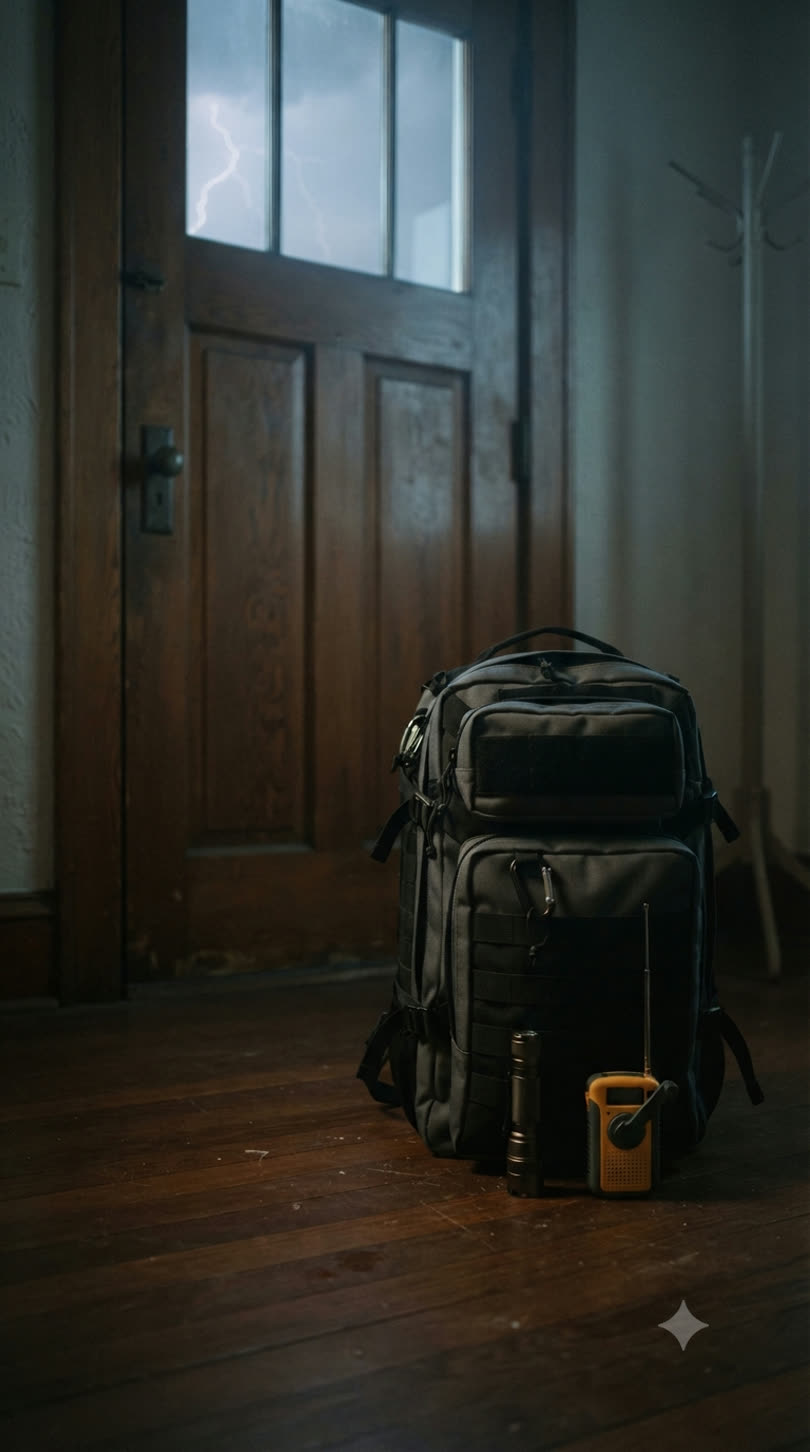
The core checklist
- Water — 1 gallon per person per day, 3-day minimum (2 weeks better where possible).
- Food — 3-day minimum of non-perishable food needing no cooking, refrigeration, or water.
- NOAA Weather Radio — battery-powered or hand-crank, with SAME tone alert for county-level warnings.
- Flashlight and extra batteries for it and the radio.
- First aid kit.
- Whistle — to signal for help.
- Dust mask — to help filter contaminated air.
- Plastic sheeting and duct tape — for shelter-in-place sealing.
- Moist towelettes, garbage bags, and plastic ties — personal sanitation.
- Manual can opener — non-negotiable if your food supply includes cans.
- Local maps — in case digital navigation is unavailable.
- Cell phone with chargers and a backup battery.
Household-specific additions ready.gov flags separately
- Prescription medications and a list of dosages.
- Glasses, contact lenses and solution.
- Infant formula, diapers, and bottles if applicable.
- Pet food, water, and supplies.
- Copies of important documents (ID, insurance, medical, bank records) in a waterproof container.
- Cash in small bills — card readers and ATMs may not work in a power outage.
- A change of clothing and sturdy shoes per person.
Storage and packing tips
Ready.gov recommends storing items in airtight plastic bags and packing the whole kit into one or two easy-to-carry containers — a plastic bin or duffel bag — so it can be grabbed quickly if you need to move. Keep it somewhere accessible, not buried behind other storage.
Refresh interval
Check the kit roughly every six months: rotate water and food per their respective rules, test and replace batteries, verify medications haven't expired, and resize the kit for any household changes — a new baby, a pet, or a family member with new medical needs.
Frequently Asked Questions
Water (1 gal/person/day, 3-day minimum), non-perishable food (3-day minimum), a battery-powered or hand-crank NOAA Weather Radio, flashlight, first aid kit, extra batteries, a whistle to signal for help, dust mask, plastic sheeting and duct tape, moist towelettes and garbage bags for sanitation, a manual can opener, local maps, and a phone with chargers.
For most households, a well-stocked basic kit covering ready.gov's checklist is enough — the term 'bug-out bag' implies you'll be moving on foot, which is a smaller subset of emergency scenarios than staying in place. Build the basic kit first; add portability only if your specific risks (wildfire evacuation zone, for example) call for it.
Prescription medications, extra glasses/contacts, infant formula and diapers if applicable, pet food and supplies, and copies of important documents. Ready.gov explicitly flags these as items that vary by household and aren't on the generic checklist.
Roughly every six months — many households tie this to daylight saving time changes. Rotate water and food, replace batteries, check medications for expiration, and resize the kit for any household changes.
It depends on the specific kit — see our full breakdown at Are Premade Bug-Out Bags Worth It. The short version: check that any premade kit has real water storage/treatment and food with genuine multi-year shelf life, not just a large item count.